Can You Take a Multivitamin and Vitamin D Together? A UK Guide to Stacking Supplements Safely
It's the time of year when the NHS advises everyone in the UK to consider a daily vitamin D supplement. Many people already take a multivitamin, so the obvious next question is: can you take a multivitamin and vitamin D together? Usually, yes. But vitamins don't know which bottle they came from — the doses simply add up. This guide shows you how to check your total in a few minutes, which nutrients most often double up, and how to build a daily routine that stays within NHS guidance.
Table of Contents
- The Short Answer
- Why Doses Add Up: The Stacking Problem
- Vitamin D: The Numbers to Know
- Other Nutrients That Often Double Up
- Combinations to Check With a Pharmacist First
- How to Build a Sensible Daily Routine
- Timing Tips That Make a Difference
- FAQ
The Short Answer
Yes, most adults can take a multivitamin and a vitamin D supplement on the same day — as long as the total vitamin D from both stays at or below 100 micrograms (4,000 IU) a day, the maximum the NHS says adults should not exceed. The same "add it all up" rule applies to vitamin A, zinc, vitamin B6 and a few others that appear in more than one product.
The one-minute rule: for every nutrient that appears on more than one of your labels, add the amounts together and compare the total with the NHS figures in this guide. If you're over, drop or space out one of the products.
Why Doses Add Up: The Stacking Problem
Supplement routines tend to grow one bottle at a time. A multivitamin for general cover, vitamin D for the winter, something for energy, something for joints. Each product is sensible on its own, but nobody checks the combined total — and several nutrients appear in almost every formula.
Water-soluble vitamins such as vitamin C are mostly excreted when you take more than you need. Fat-soluble vitamins (A, D, E and K) are stored in the body, which is why their upper amounts matter more over months of daily use. Minerals such as zinc can also cause problems at high, long-term doses. Our guide to reading a supplement label explains how to find the per-serving figures you need for the sums below.
Vitamin D: The Numbers to Know
Vitamin D is the nutrient people most often double up on, especially from October to March. These are the figures from the NHS vitamin D page:
| What the NHS says | Amount |
|---|---|
| Everyone should consider a daily supplement in autumn and winter | 10 µg (400 IU) |
| Maximum for adults — do not take more than this a day | 100 µg (4,000 IU) |
| Maximum for children aged 1 to 10 | 50 µg (2,000 IU) |
| Maximum for infants under 12 months | 25 µg (1,000 IU) |
| Conversion | 1 µg = 40 IU |
Two things are worth knowing. First, 10 µg is a general recommendation, while 100 µg is a ceiling — not a target. Second, the NHS notes that you cannot overdose on vitamin D from sunlight; the risk comes from supplements. Taking too much over a long period can cause calcium to build up in the body (hypercalcaemia), which can weaken bones and damage the kidneys and heart.
Labels use micrograms and IU interchangeably, so convert everything to one unit before you add. Our articles on vitamin D 1000 IU and vitamin D3 with K2 go deeper on dose and form.
Common combinations, added up
| Combination (per day) | Total vitamin D | Within the NHS adult maximum? |
|---|---|---|
| Multivitamin with 10 µg + nothing else | 10 µg (400 IU) | Yes |
| Multivitamin with 25 µg + vitamin D 25 µg (1,000 IU) | 50 µg (2,000 IU) | Yes |
| Multivitamin with 25 µg + vitamin D 50 µg (2,000 IU) | 75 µg (3,000 IU) | Yes |
| Vitamin D 100 µg (4,000 IU) on its own | 100 µg (4,000 IU) | Yes — exactly at the maximum |
| Multivitamin with 25 µg + vitamin D 100 µg (4,000 IU) | 125 µg (5,000 IU) | No — don't take both on the same day |
The last row is the most common mistake. A high-strength 4,000 IU product already sits at the NHS adult maximum by itself, so it shouldn't be combined on the same day with anything else that contains vitamin D — including a multivitamin or cod liver oil.
Other Nutrients That Often Double Up
Vitamin D isn't the only nutrient to watch. These are the ones that most often appear in more than one product, with the guidance from the NHS pages on vitamin A, B vitamins, vitamin E and other minerals:
| Nutrient | NHS guidance | Where it hides |
|---|---|---|
| Vitamin A | Food and supplements combined should not exceed 1.5 mg (1,500 µg) a day | Multivitamins, cod liver oil and other fish liver oils, "skin" and "eye" formulas; liver and pâté in the diet |
| Beta-carotene | Do not take more than 7 mg a day from supplements unless advised by a doctor | Multivitamins, "eye health" and "tanning" formulas |
| Zinc | Do not take more than 25 mg a day from supplements unless advised by a doctor | Multivitamins, immune formulas, vitamin C + zinc, hair-skin-nails and men's vitality products |
| Vitamin B6 | Do not take more than 10 mg a day from supplements unless advised by a doctor | B-complex, "energy" formulas, multivitamins |
| Vitamin E | 540 mg (800 IU) or less a day from supplements is unlikely to cause harm | Multivitamins, CoQ10 and fish oil softgels, beauty supplements |
| Selenium | 350 µg or less a day from supplements is unlikely to cause harm | Multivitamins, "thyroid" and antioxidant formulas |
| Magnesium | 400 mg or less a day from supplements is unlikely to cause harm | Multivitamins, sleep and muscle formulas, calcium-magnesium-zinc tablets |
A quick example with zinc: a multivitamin providing 11 mg plus a second product providing 15 mg already comes to 26 mg — just over the NHS limit for supplements. Neither label is wrong; the problem only appears when you add them together. Our guide to zinc and vitamin pairings covers zinc in more detail.
Vitamin A deserves a special mention: the NHS says that more than an average of 1.5 mg a day over many years may make bones more likely to fracture in later life, and that pregnant women should avoid liver and liver products. If you take a multivitamin with vitamin A, don't add cod liver oil on top. A fish body oil — such as one made from anchovies and sardines — provides omega-3 without the extra vitamin A. See our guide to omega-3 EPA vs DHA for the difference.
Combinations to Check With a Pharmacist First
Some combinations are less about totals and more about medicines. Speak to your GP or pharmacist before adding these to your routine:
- Vitamin K2 and warfarin. Vitamin K affects how warfarin works. In a study of healthy volunteers taking a similar anticoagulant, menaquinone-7 (vitamin K2) doses as low as 10 µg a day changed blood-clotting results in some people. If you take warfarin or a similar medicine, ask before taking any K2 product.
- Omega-3 and blood thinners. Fish oil is generally well tolerated, but check first if you take anticoagulants or have a bleeding disorder.
- CoQ10 and warfarin. Mayo Clinic notes that CoQ10 might make warfarin work less well. If you take a statin and are wondering about CoQ10, read our guide to CoQ10 and statins.
- Herbal products and any regular medicine. Botanicals such as milk thistle are not vitamins, but they can still matter alongside prescribed medicines — see our milk thistle guide.
The same applies if you are pregnant, breastfeeding, have a long-term condition such as kidney disease, or are under hospital care.
How to Build a Sensible Daily Routine
You don't need a spreadsheet. Five steps cover almost everyone:
- List every product you take, including anything occasional, such as immune or "energy" sachets.
- Write down the amount per daily serving for vitamin D, vitamin A, zinc, B6, vitamin E, selenium and magnesium. Watch for servings of two tablets or capsules.
- Add the totals and convert units where needed (vitamin D: 1 µg = 40 IU).
- Compare with the NHS figures in the tables above.
- If you're over, remove the product that adds least, or take the overlapping products on different days.
A worked example: five supplements, one routine
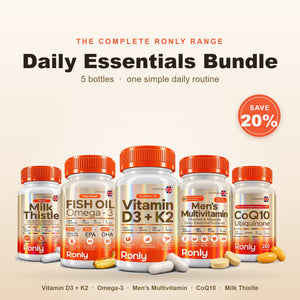
Here is how the sums look for our own Daily Essentials Bundle, using the amounts on each label:
| Product (daily serving) | Overlapping nutrients |
|---|---|
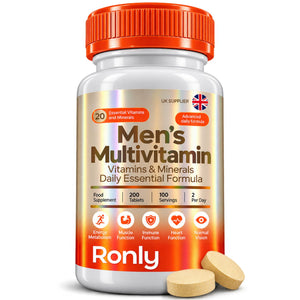
| Men's Multivitamin (2 tablets) | Vitamin D 25 µg, vitamin A 900 µg, zinc 11 mg, vitamin E 15 mg, B6 2.17 mg, selenium 55 µg, magnesium 120 mg |
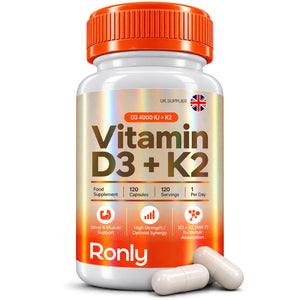
| Vitamin D3 4000 IU + K2 (1 capsule) | Vitamin D 100 µg, vitamin K2 100 µg |
| CoQ10 400mg (2 softgels) | Vitamin E 68 mg |
| Omega-3 Triple Strength (2 softgels) | None of the nutrients above (fish body oil, no added vitamin A or D) |
| Milk Thistle + Dandelion (1 capsule) | None (botanical extracts) |
Adding it up:
- Vitamin E: 15 mg + 68 mg = 83 mg — well within 540 mg.
- Zinc, B6, selenium, magnesium, vitamin A: each comes from the multivitamin only, all within NHS guidance (keep an eye on vitamin A if you eat liver often).
- Vitamin D: 25 µg + 100 µg = 125 µg — above the 100 µg adult maximum.
So the multivitamin and the 4,000 IU D3 + K2 should not be taken on the same day. Two simple ways to handle it:
- Alternate the days — for example, the multivitamin from Monday to Friday and the D3 + K2 at the weekend. No single day goes above 100 µg.
- Let the multivitamin be your vitamin D through autumn and winter — its 25 µg is already 2.5 times the NHS 10 µg recommendation — and keep the high-strength D3 + K2 for times when your GP has advised more.
Omega-3, CoQ10 and milk thistle can sit alongside either option, provided none of the medicine cautions above applies to you.
Timing Tips That Make a Difference
- Take fat-soluble vitamins with a meal. Vitamins A, D, E and K, omega-3 and CoQ10 are all absorbed better with food that contains some fat.
- Split if your stomach complains. Two-tablet multivitamin servings can usually be taken together or split across two meals — check the label.
- Keep it consistent. A routine you follow every day beats a perfect one you forget. Linking supplements to breakfast or your evening meal helps.
Our guide to the best time to take vitamins and supplements covers morning versus evening in more detail.
FAQ
Can I take vitamin D and a multivitamin at the same time of day? Yes — timing isn't the issue, the total dose is. If the combined vitamin D is 100 µg (4,000 IU) or less, taking them together with a meal is fine.
Is 4,000 IU of vitamin D a day safe? The NHS says adults should not take more than 100 µg (4,000 IU) a day. It's the upper limit, not a target, and it shouldn't be combined with other vitamin D sources on the same day. Children have lower limits.
Do I need vitamin D in summer? According to the NHS, between late March or early April and the end of September most people can make all the vitamin D they need from sunlight. People who are rarely outdoors, usually cover most of their skin outdoors, live in a care setting or have dark skin are advised to take 10 µg all year round.
Can I take omega-3 with a multivitamin? Usually yes. Just check the omega-3 isn't a fish liver oil, such as cod liver oil, which also contains vitamins A and D.
What if I've been taking too much vitamin D? Stop the extra product and speak to your GP or pharmacist, especially if you've been well over 100 µg a day for a long time or feel unwell.
If you want a routine that's easy to add up, every Ronly label lists amounts per daily serving. The Ronly Men's Multivitamin provides 25 µg (1,000 IU) vitamin D3 plus 18 other vitamins and minerals, iron-free, in a 100-day bottle. The Ronly Vitamin D3 4000 IU + K2 MK-7 provides 100 µg D3 and 100 µg K2 in one capsule — a high-strength option to take on its own, not alongside other vitamin D. Both are made to GMP and HACCP standards for Ronly Health Limited, UK.
Food supplements should not be used as a substitute for a varied and balanced diet and a healthy lifestyle. This article is general information, not medical advice. If you take medicines or have a medical condition, speak to your GP or pharmacist before starting a supplement.