Vegan Protein Powder UK: Smart Buyer Guide
Most advice about vegan protein powder UK shopping starts with flavour, price and the number printed in large type on the front of the tub. That's the wrong order. A powder can taste pleasant and still provide a weak amino acid profile, a disappointing amount of protein per serving, or inadequate information about contaminant testing.
The UK category is expanding, but market growth doesn't guarantee better formulations. Estimates place the UK plant protein market at USD 453.21 million in 2026, with a projection of USD 604.18 million by 2031, representing a 5.92% CAGR, while another analysis estimated the UK plant-based protein market at USD 955.1 million in 2025 and projected USD 1,356.9 million by 2030 at a 7.3% CAGR (Mordor Intelligence's UK plant protein market analysis). More products mean more choice, but also more need for scrutiny.
Table of Contents
- Why Most Vegan Protein Labels Mislead UK Shoppers
- Decoding Amino Acid Profiles and Protein Sources
- Reading the Fine Print for Density and Contaminants
- Choosing Between Bulk Tubs and Single-Serve Sachets
- Verifying Retailer Safety and UK Manufacturing Standards
- Maximising Freshness and Daily Usage Results
Why Most Vegan Protein Labels Mislead UK Shoppers
“Plant-based” describes the origin of a product. It doesn't tell you whether the formula delivers a useful amount of protein, whether the amino acids are balanced, or whether the manufacturer publishes meaningful quality controls. Treating that front-of-pack phrase as a nutritional guarantee is one of the easiest mistakes UK shoppers can make.
The commercial opportunity helps explain the crowded shelves. A UK government-backed report projected the combined UK and European alternative-protein sector to reach £6.8 billion by 2025, and recorded UK plant-based food sales value growth of 73% between 2018 and 2020 (UKRI's alternative proteins report). Later estimates put UK meat alternatives at £1.1 billion in 2024 and dairy alternatives at £565 million in 2025, while the UK plant-based protein supplements market was estimated at USD 95.2 million in 2023, with a projection of USD 156.7 million by 2030 (the same UKRI report). Those figures show genuine demand, not automatic product quality.
The front of the tub is the least useful place to start
Marketing language often highlights “clean”, “natural”, “complete” or “high protein”. Your decision should begin with the nutrition panel and ingredient list instead. Check the actual grams of protein per serving, the serving weight, the named protein sources, and whether the manufacturer provides an amino acid profile.
UK product surveys have found that plant-based alternatives can be higher in fibre but lower in protein than conventional equivalents, with substantial variation between products (Eat Protein's UK plant-based protein powder guide). That variation makes assumptions expensive. A green leaf on the packaging can't replace label reading.
Use this practical guide to reading a supplement label before buying. If the product hides the protein blend behind vague wording, gives no amino acid breakdown, or makes broad wellness promises without clear quantities, I'd leave it on the shelf.
Decoding Amino Acid Profiles and Protein Sources
Protein quality matters because your body uses individual amino acids, not marketing claims. The key questions are whether the powder supplies all essential amino acids in useful proportions and whether the protein is digestible enough to make those amino acids available.
PDCAAS, or Protein Digestibility Corrected Amino Acid Score, is a useful screening tool. A UK review places whey and casein at 1.0, soy protein isolate at approximately 0.98 to 0.99, pea protein concentrate at approximately 0.73 to 0.92, depending on source quality, and many other plant proteins around 0.6 to 0.7 (Health and Wellness Reviews' vegan protein powder analysis). These are benchmarks, not a substitute for examining the actual formula.
Compare the source, not just the scoop
| Protein Source | PDCAAS Score | Amino Acid Profile |
|---|---|---|
| Whey or casein | 1.0 | Complete, highly digestible dairy proteins |
| Soy protein isolate | Approximately 0.98 to 0.99 | Near-complete essential amino acid profile |
| Pea protein concentrate | Approximately 0.73 to 0.92 | Useful protein source, but quality varies and methionine can be limiting |
| Rice protein | Often assessed below higher-quality isolates | Can complement pea protein, particularly where lysine is limited |
| Pumpkin and other plant proteins | Many plant proteins cluster around 0.6 to 0.7 | Often benefit from blending to improve balance |
The table's practical message is simple. Soy isolate is a strong single-source option if you tolerate soy and want a near-complete plant protein. Pea protein is useful, but I prefer a product that discloses its amino acid profile rather than relying on the word “isolate” as proof of quality.
Look for leucine and total essential amino acids
Leucine helps signal muscle protein synthesis, but you shouldn't assess it in isolation. A credible product should disclose leucine and the wider essential amino acid profile, allowing you to judge whether the serving provides a balanced contribution to recovery and daily protein intake.
Blends solve a common formulation weakness. Pea can be combined with rice or pumpkin to improve amino acid balance, because complementary sources can cover limitations found in individual proteins. A product that lists “plant protein blend” without naming the proportions or providing amino acid information earns my suspicion.
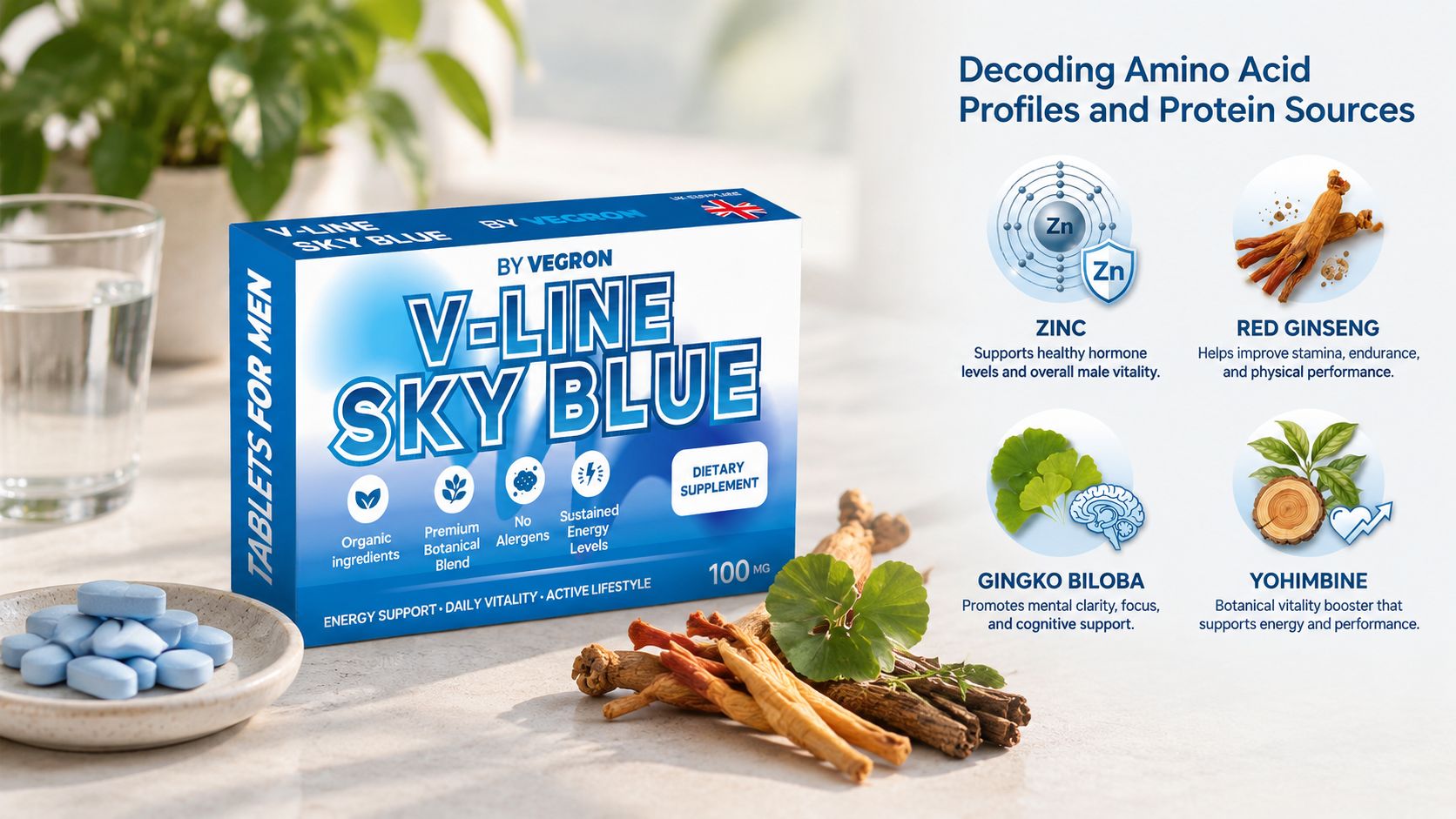
A powder such as Vegron Sky Blue is a separate type of vegan supplement, formulated as a daily herbal tablet for adult men with ingredients including red ginseng, ginkgo biloba, cynomorium extracts, zinc and magnesium. It isn't a protein powder, so don't confuse general vitality positioning with protein nutrition.
If you're comparing plant protein with dairy protein, the distinction is covered more directly in this guide to whey protein concentrate. For a vegan product, my minimum standard is a named source, a disclosed serving size, a clear protein quantity, and a full amino acid profile or a defensible complementary blend.
Reading the Fine Print for Density and Contaminants
A large scoop doesn't necessarily mean a protein-dense product. Start by dividing the grams of protein in one serving by the serving weight, then multiply by 100. That gives you protein percentage by weight and exposes formulas padded with flour, carbohydrate ingredients, flavouring systems or unnecessary bulking agents.
UK guidance recommends comparing protein per 100 g and per serving, then checking whether a formula is enriched or blended to address amino acid limitations (Eat Protein's label-focused guide). Don't accept a “high protein” claim without checking both measurements. A serving may look substantial while delivering modest protein density.
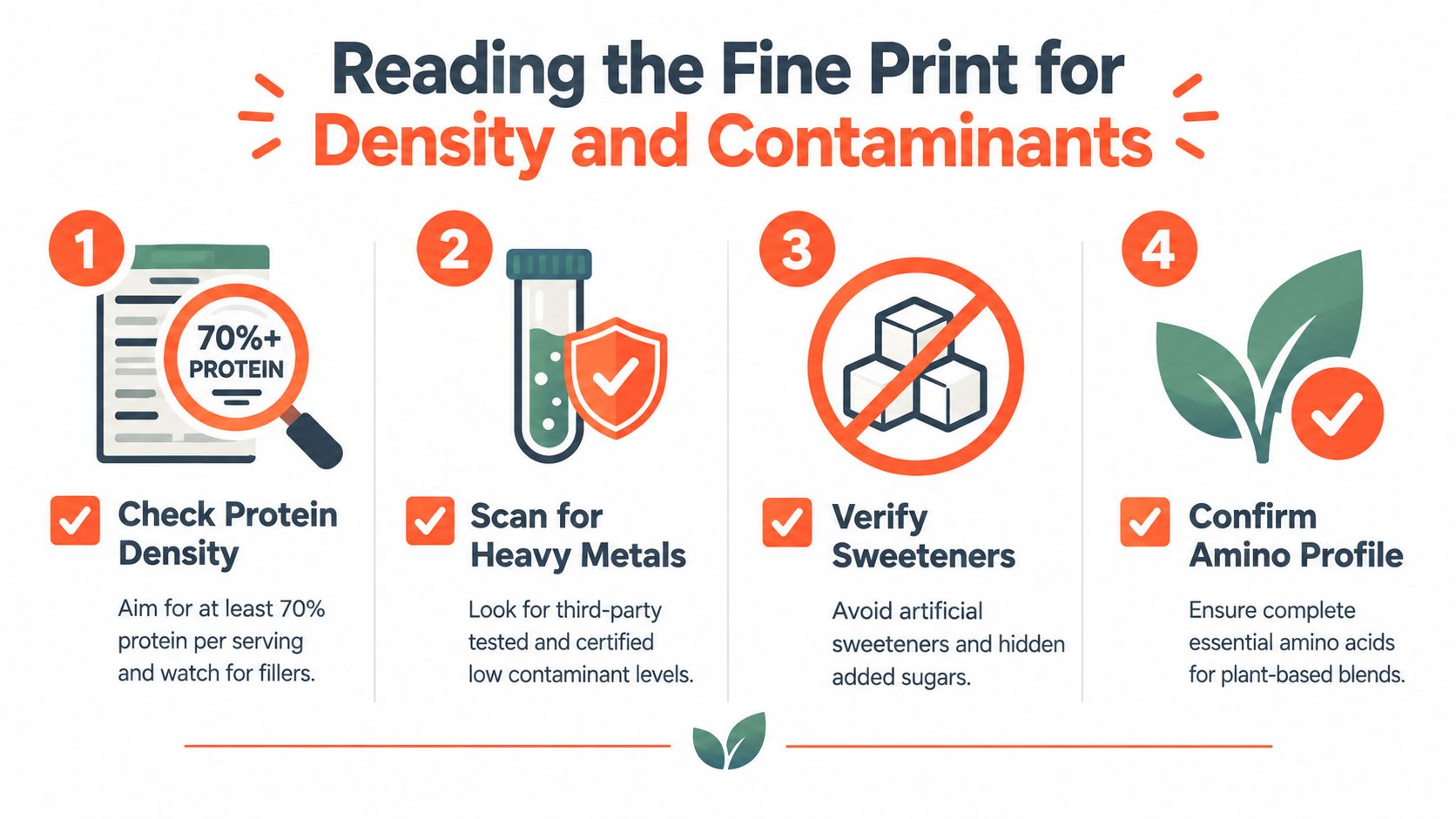
Use this label audit
- Calculate protein density. Compare protein per serving with serving weight, and check the protein figure per 100 g. A powder that contains a long list of fillers should justify its place in your routine.
- Find the amino acid evidence. Look for leucine, total essential amino acids and, ideally, the complete amino acid profile. If the manufacturer won't show it, choose a more transparent formula.
- Ask about contaminants. Many consumer guides are too casual about this. Consumer Reports found elevated lead levels in nearly all plant-based protein products it tested, and its 2025 follow-up reported that over two-thirds of protein powders and instant shake mixes contained unsafe or concerning lead levels, including vegan products (Consumer Reports' protein powder lead investigation). That isn't a reason to avoid every vegan powder. It is a reason to demand batch testing and clear contaminant controls.
- Inspect sweeteners and texture agents. Check for added sugars, sugar alcohols, artificial sweeteners, gums and thickeners. These ingredients aren't automatically unacceptable, but a formula with several can be harder to tolerate. Choose the simplest product that still mixes and tastes acceptable to you.
Practical rule: If a brand publishes ingredient quantities but says nothing about lead, arsenic or independent batch testing, treat the silence as a quality gap.
Third-party certification can add confidence, but don't confuse a vegan certification with contaminant testing. Vegan status confirms suitability for a dietary preference. It doesn't, by itself, demonstrate low heavy-metal levels. The same principle applies to organic spirulina powder, where source, processing and testing deserve attention because concentrated plant ingredients can carry quality considerations beyond their nutrient profile.
Choosing Between Bulk Tubs and Single-Serve Sachets
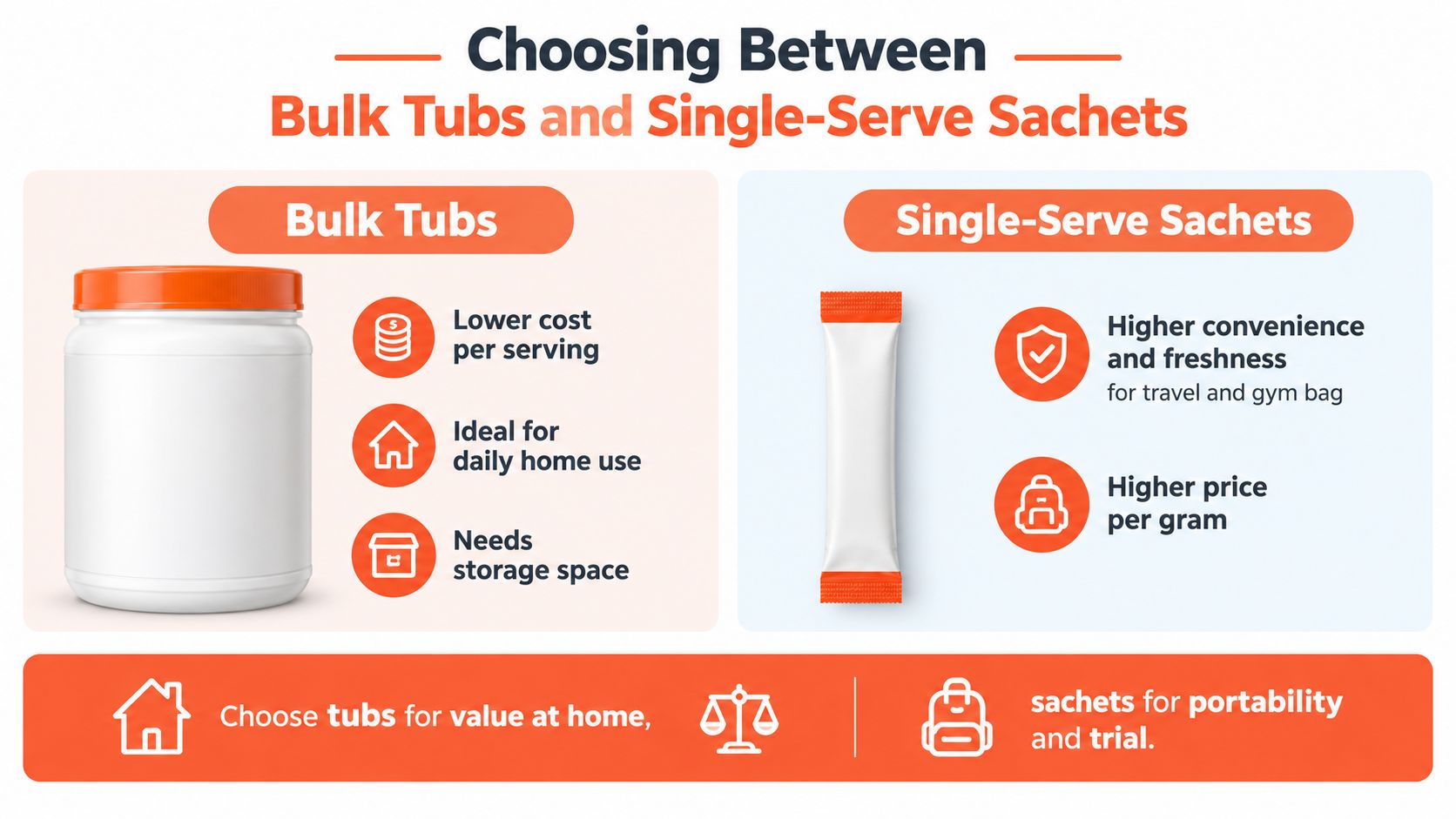
The biggest tub is only good value if you use it consistently. Bulk formats suit someone who makes a shake at home, has dry storage space and already knows the flavour and texture work for them. They reduce packaging per serving and usually make routine use simpler, but they can become an expensive cupboard item if the powder is unpleasant or awkward to mix.
Single-serve sachets solve a different problem. They fit a gym bag, work drawer or travel case, protect individual portions from repeated exposure to air and moisture, and let you test a flavour without committing to a large tub. You'll usually pay more per gram for that convenience, and individual wrappers create more packaging.
Match the format to your actual routine
UK retail evidence points to a meaningful format shift. Single-serve sachets grew 18% year on year in 2025, compared with 6% for bulk formats (IndexBox's UK vegan protein powder market analysis). That doesn't make sachets nutritionally superior. It shows that portability and controlled portions are becoming more valuable to shoppers.
Choose a bulk tub if you:
- Drink protein at home regularly: You'll benefit from a predictable supply and less handling per serving.
- Know your preferred formula: Don't buy a large container of an untested flavour.
- Can store it properly: The lid must close securely, and the powder needs a cool, dry place.
Choose sachets if you:
- Train or work away from home: A portioned sachet avoids carrying a tub and measuring scoop.
- Value freshness: Open only what you need, especially if your storage conditions are warm or humid.
- Want to trial a formula: Test flavour, digestion and mixability before committing to bulk.
My verdict is practical. Buy tubs for an established home routine, sachets for portability and product trials. Don't choose by container size alone.
Verifying Retailer Safety and UK Manufacturing Standards
A good formula can still be a poor purchase if the seller is opaque. UK shoppers should verify the retailer, manufacturer and fulfilment process before entering payment details, particularly when a product is sold through a marketplace listing with limited accountability.
Check the manufacturer first
Look for a clearly identified business, a complete ingredient list, serving guidance, allergen information and a contact route that works. A reputable seller should be willing to explain where the product is made and what quality controls apply. GMP, or Good Manufacturing Practice, supports organised production and quality control, while HACCP provides a structured approach to identifying and managing food-safety hazards.
Neither acronym should be treated as decorative packaging. Check whether the retailer explains its manufacturing controls rather than just printing unexplained badges on a product page. Also confirm that the batch number, best-before information and seal are present when the product arrives.
Treat marketplace shortcuts carefully
A listing with a polished photograph can conceal a confusing supply chain. Before buying, review:
- Business identity: Confirm the legal retailer name, contact details and UK delivery information.
- Product traceability: Look for a batch number, expiry or best-before date and complete labelling.
- Testing transparency: Ask whether the batch has been tested for heavy metals and whether results are available.
- Allergen controls: Check the allergen statement and the possibility of shared production equipment.
- Checkout security: Use a secure checkout and avoid sellers requesting payment through informal channels.
- Returns and delivery: Read the policy before ordering, including how damaged or tampered products are handled.
A credible retailer makes it easy to identify the product, the seller and the route for resolving a problem.
UK manufacturing doesn't automatically make a powder nutritionally excellent, but it can make accountability easier when the company provides clear production information. You're looking for evidence of control, not a flag on the label. If the seller cannot answer basic questions about identity, batch handling or testing, buy elsewhere.
Maximising Freshness and Daily Usage Results
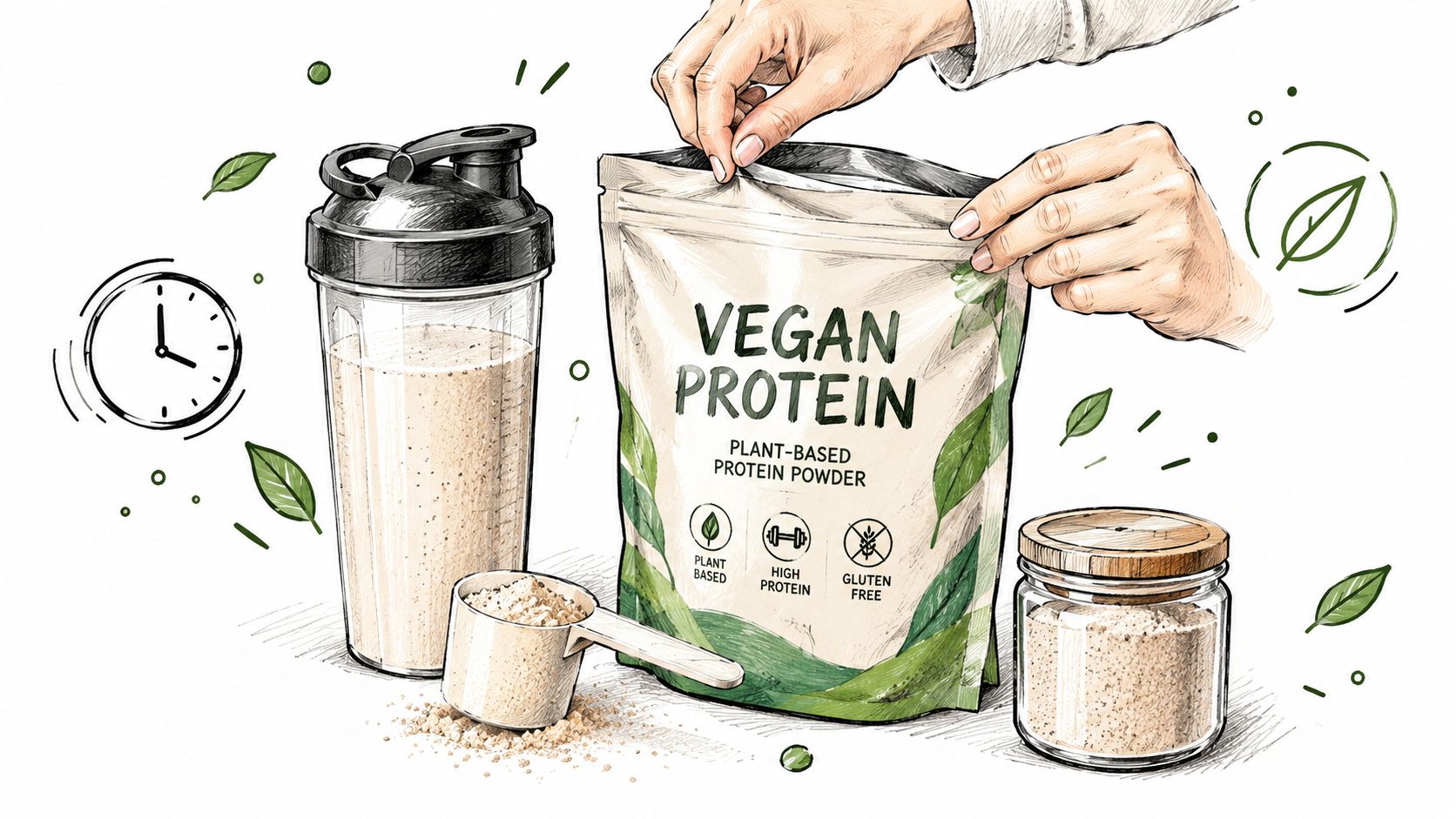
Storage errors can turn a manageable powder into a clumped, stale mess. Keep the container tightly closed in a cool, dry cupboard, away from steam, direct sunlight and heat. Don't store it beside a kettle or let a damp scoop return to the powder.
The same principles apply to other supplements, and this guide to storing supplements correctly covers the risks from heat, moisture and light in practical terms.
Make the powder easy to use
Start with the liquid, then add the powder. This reduces dry pockets at the bottom of the shaker. Plant proteins often taste earthier than dairy proteins, so use a fortified plant milk, coffee, cocoa, berries or banana if plain water makes the drink unappealing.
Timing matters less than consistency. Use a serving after training if that's the easiest way to remember it, or add it to breakfast when your diet tends to fall short of protein. You can also blend it into porridge or baking, but avoid treating protein powder as a replacement for varied meals.
Monitor digestion for the first few uses. If a full serving feels heavy, reduce the portion temporarily, simplify the accompanying ingredients and check whether sweeteners, gums or added fibres are responsible. A powder only improves your routine when you can use it comfortably and repeatedly.
Ronly Health Limited offers plant-based supplements and educational guidance on label reading, storage and daily wellness, with products manufactured in the UK under GMP and HACCP controls. Visit Ronly Health Limited to explore its supplement range and make your next purchase with a sharper quality checklist.