Fish Oil vs Cod Liver Oil: What's the Difference and Which Should You Take?
Fish oil and cod liver oil sit side by side on the shelf, both promise omega-3, and plenty of people assume they're the same thing. They're not. Fish oil comes from the flesh of oily fish; cod liver oil comes from the liver of cod — and the liver brings two extra nutrients with it: vitamin A and vitamin D. That difference decides which one suits you, especially if you take a multivitamin, are pregnant or trying for a baby, or want a higher dose of omega-3. This guide compares the two side by side, using NHS guidance, so you can choose with confidence.
Table of Contents
- The Short Answer
- Fish Oil vs Cod Liver Oil at a Glance
- Omega-3: How Much Are You Really Getting?
- Vitamin A: The Main Reason to Choose Carefully
- Vitamin D: A Plus in Winter, If You Add It Up
- Which One Should You Choose?
- How to Choose a Good Fish Oil
- FAQ
The Short Answer
If you want omega-3 on its own — or you already take a multivitamin, or you're pregnant or trying for a baby — choose a fish (body) oil. Cod liver oil can make sense for someone who takes no other vitamin A or D and wants a little of both alongside omega-3, but its vitamin A content means you need to add up your totals.
The NHS position on pregnancy is clear: "Do not take cod liver oil or any supplements containing vitamin A (retinol) when you're pregnant." (NHS)
Fish Oil vs Cod Liver Oil at a Glance
| Fish oil (fish body oil) | Cod liver oil | |
|---|---|---|
| Made from | The flesh of oily fish such as anchovies, sardines, mackerel or salmon | The liver of cod |
| Omega-3 (EPA + DHA) | Yes — from standard to highly concentrated, depending on the product | Yes — usually at lower concentrations than high-strength fish oils |
| Vitamin A (retinol) | Usually little or none — check the label for anything added | Yes, naturally present |
| Vitamin D | Usually little or none — check the label for anything added | Yes, naturally present |
| During pregnancy | Check with your midwife or GP | The NHS says do not take it |
| Alongside a multivitamin | Easy — no vitamins to double up | Vitamins A and D add to what's in the multivitamin |
Omega-3: How Much Are You Really Getting?
Both oils provide the two long-chain omega-3s that matter, EPA and DHA. The approved health claims in the UK are that EPA and DHA contribute to the normal function of the heart (with 250 mg EPA + DHA a day), and that DHA contributes to normal brain function and normal vision (with 250 mg DHA a day).
The catch is concentration. A label may say "1,000 mg fish oil", but a standard fish oil contains only around 300 mg of omega-3 in that capsule, and cod liver oil is often similar or lower. High-strength concentrates provide much more per softgel. Always look for EPA + DHA per daily serving rather than the headline oil figure — our guide to omega-3 EPA vs DHA shows exactly where to find it on the label.
Food comes first: the NHS recommends at least two portions of fish a week, including one of oily fish such as salmon, mackerel, sardines, herring, pilchards, sprats or trout (fresh and canned tuna don't count as oily). A supplement is useful if that rarely happens.
Vitamin A: The Main Reason to Choose Carefully
Vitamin A is essential, but it is stored in the body, and too much over a long time can cause problems. The NHS vitamin A page advises:
- Your total from food and supplements combined should not exceed 1.5 mg (1,500 µg) a day.
- Fish liver oil is high in vitamin A, so if you eat liver or liver pâté once a week, you should not take supplements containing vitamin A, including fish liver oil.
- A long-term average above 1.5 mg a day may make bones more likely to fracture later in life — particularly relevant to older people, and especially women.
That bone concern comes partly from research such as the US Nurses' Health Study, which followed 72,337 postmenopausal women for 18 years. Women with the highest retinol intakes (2,000 µg a day or more) had a higher risk of hip fracture than those with the lowest (Feskanich et al., 2002). It's an observational study, so it can't prove cause and effect, but it's one reason UK guidance is cautious.
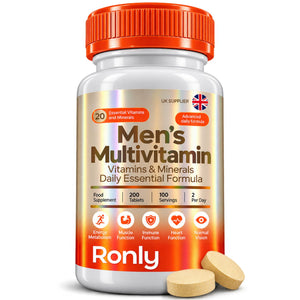
The practical problem is stacking. Many multivitamins already contain vitamin A — the Ronly Men's Multivitamin, for example, provides 900 µg per daily serving. Add cod liver oil and a diet that includes cheese, eggs and oily fish, and it's easy to drift above 1.5 mg. A fish body oil avoids that problem entirely. Our guide to combining supplements safely shows how to add up your totals.
Vitamin D: A Plus in Winter, If You Add It Up
Cod liver oil's natural vitamin D is a genuine advantage for some people. The NHS advises everyone in the UK to consider a daily supplement containing 10 µg (400 IU) of vitamin D in autumn and winter, and says adults should not take more than 100 µg (4,000 IU) a day.
So cod liver oil can contribute to your winter vitamin D — but if you also take a vitamin D supplement or a multivitamin with vitamin D, the amounts add together. If you already take a dedicated vitamin D product, a fish body oil is the simpler partner, because it adds omega-3 without adding to your vitamin D total.
Which One Should You Choose?
| Your situation | Better fit | Why |
|---|---|---|
| You take a multivitamin | Fish oil | No extra vitamin A or D to double up |
| You're pregnant or trying for a baby | Not cod liver oil — ask your midwife or GP about omega-3 | NHS advice is to avoid cod liver oil and vitamin A supplements |
| You eat liver or pâté most weeks | Fish oil | NHS advice is not to add vitamin A supplements, including fish liver oil |
| You already take vitamin D (e.g. 1,000–4,000 IU) | Fish oil | Keeps your vitamin D total simple and within the 100 µg maximum |
| You want a higher dose of EPA + DHA | High-strength fish oil | More omega-3 per softgel, fewer capsules |
| You take no other supplements and want a little vitamin A and D with your omega-3 | Either — cod liver oil can work | Check the vitamin A per serving and your diet |
How to Choose a Good Fish Oil
- EPA + DHA per serving. This is the number that counts. Many high-strength products provide 1 g or more of EPA + DHA a day; 250 mg is the amount linked to the approved heart claim.
- Source. Small fish such as anchovies and sardines are a common source for purified body oils.
- Freshness. Omega-3 oils can oxidise. Look for an antioxidant such as vitamin E (tocopherols) or rosemary extract in the ingredients, keep the bottle closed and away from heat, and use it before the best-before date. A strongly fishy smell when you open the bottle is a bad sign.
- Purity. Fish oils sold as food in the UK must meet legal limits for contaminants such as dioxins and PCBs. Buy from a brand that tells you who makes the product and to what standard.
- Take it with food. Omega-3 is fat-soluble and easier on the stomach with a meal. See our guide to the best time to take supplements.
As with any omega-3, speak to your GP or pharmacist first if you take warfarin or another blood thinner, or have a bleeding disorder.
FAQ
Is cod liver oil the same as omega-3? No. Cod liver oil contains omega-3, but it also contains vitamins A and D. "Omega-3" or "fish oil" supplements are usually made from fish body oil, without those vitamins.
Can I take fish oil and cod liver oil together? There's usually no reason to. You'd be doubling up on omega-3 and adding vitamin A and D on top. Choose one, and add up your vitamin A and D from everything you take.
Is fish oil safe in pregnancy? The NHS advises against cod liver oil and any supplement containing vitamin A (retinol) in pregnancy. Fish body oils usually contain little or no vitamin A, but speak to your midwife or GP before taking any supplement while pregnant or breastfeeding.
Does fish oil contain vitamin D? Usually only small amounts, if any, unless it has been added — check the label. If you need vitamin D in winter, take it separately and keep your total within 100 µg (4,000 IU) a day.
Which is better for my heart? The approved claim belongs to EPA and DHA, whichever oil they come from: they contribute to the normal function of the heart with 250 mg a day. What differs between products is how much EPA and DHA you get per serving, and what else comes with it.
Ronly Omega-3 Fish Oil
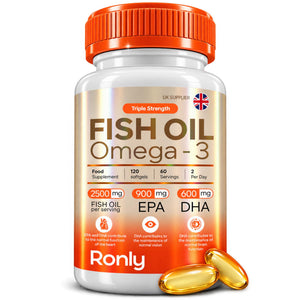
Ronly Omega-3 Fish Oil Triple Strength is a fish body oil from anchovies and sardines — not a liver oil, with no added vitamin A or D. Each 2-softgel serving provides 1,800 mg of omega-3, including 900 mg EPA and 600 mg DHA, protected with natural vitamin E and rosemary extract. EPA and DHA contribute to the normal function of the heart (beneficial effect with 250 mg EPA + DHA a day). One bottle is a 2-month supply.
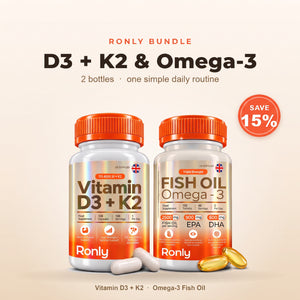
It also comes in two bundles: the D3 + K2 & Omega-3 Duo for winter vitamin D, and the Men's Daily Duo with our iron-free Men's Multivitamin — both 15% less than buying separately. Made to GMP and HACCP standards for Ronly Health Limited, UK, with free UK delivery.
Food supplements should not be used as a substitute for a varied and balanced diet and a healthy lifestyle. This article is general information, not medical advice. If you take medicines, have a medical condition, or are pregnant or breastfeeding, speak to your GP, midwife or pharmacist before starting a supplement.
References
- NHS. Vitamins, supplements and nutrition in pregnancy. nhs.uk
- NHS. Vitamin A. nhs.uk
- NHS. Vitamin D. nhs.uk
- NHS. Fish and shellfish. nhs.uk
- Feskanich D, Singh V, Willett WC, Colditz GA. Vitamin A intake and hip fractures among postmenopausal women. JAMA. 2002;287(1):47-54. doi:10.1001/jama.287.1.47 (retrieved via PubMed)